Architect of the Future: A Journey into the World of Carbon Nanotubes
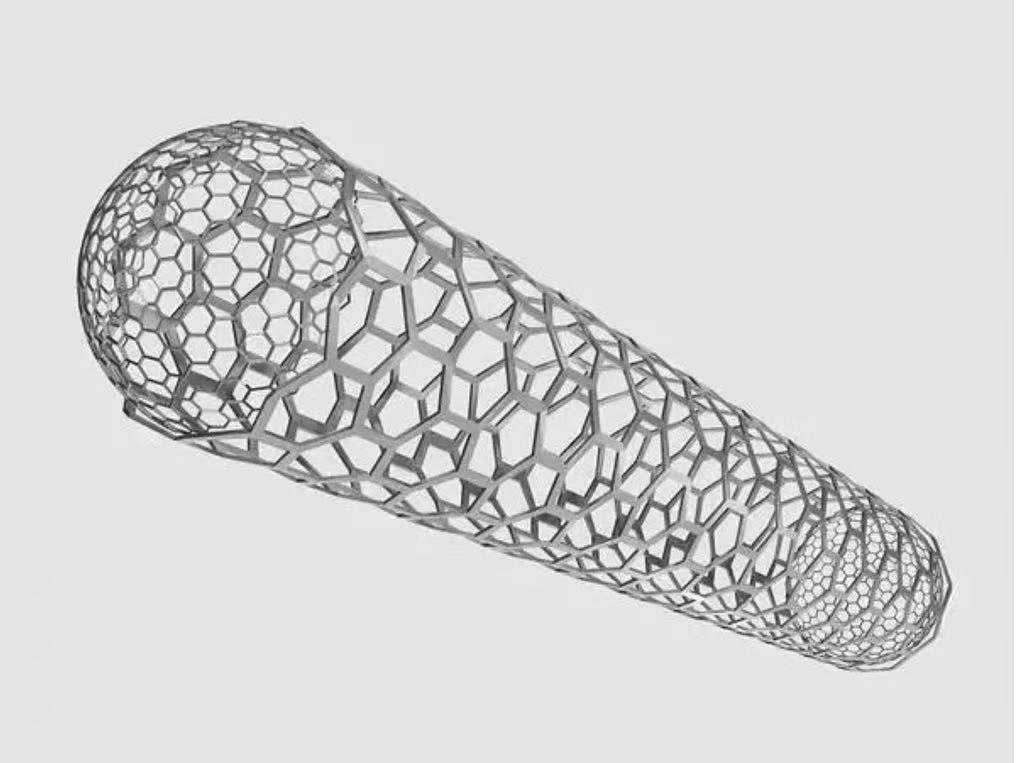
Carbon nanotubes (CNTs), one of the most exciting discoveries of modern science, are described as the "supermaterials" of the nanotechnology world. These structures, which appear to be a simple arrangement of carbon atoms, have become one of the most powerful tools that atomic-level engineering has offered to humanity. So, why are these tubes, thousands of times thinner than a human hair, so important?
What are Carbon Nanotubes? Structure and Discovery
Carbon nanotubes are formed by rolling up single-atom-thick layers of carbon called graphene into a cylindrical form. These structures are created by carbon atoms covalently bonded to each other in a hexagonal arrangement (honeycomb-like). These strong bonds give the material incredible flexibility and many times more strength than steel.
Structurally, they are divided into two main groups:
Single-Walled Carbon Nanotubes (SWCNTs): They consist of a single graphene layer, approximately 1-2 nanometers in diameter.
Multi-Walled Carbon Nanotubes (MWCNTs): They consist of multiple interwoven graphene cylinders and can have diameters up to 100 nanometers. While the history of this revolutionary material is often attributed to the work of Sumio Iijima in 1991, its roots actually go back to the observations of Soviet scientists in the 1950s. However, it only began to receive the attention it deserved in the modern nanotechnology era after the 1990s.
Application Areas: A Technology Without Borders
The unique electrical conductivity, thermal stability, and mechanical strength of carbon nanotubes have made them the focus of many different sectors.
1. Industry and Aerospace
In the aerospace sector, increasing strength while reducing weight is a top priority. Carbon nanotube-based composites are used in aircraft fuselages, missiles, and spacecraft, providing both fuel savings and resistance to extreme temperatures. They are also used in the construction sector to increase the strength of concrete and steel.
2. Environmental and Energy Solutions
Carbon nanotubes play a critical role in the search for clean energy to replace fossil fuels. They are ideal candidates for increasing UV absorption in solar panels, enhancing energy storage capacity in lithium-ion batteries, and improving hydrogen storage systems. They also offer high efficiency in wastewater treatment, removing heavy metals and pathogens from water.
3. Biomedical Revolution
In the medical world, these tubes act like "microscopic couriers." In cancer treatment, they minimize side effects by delivering drugs directly to the target cell. Furthermore, their antibacterial properties offer hope in combating drug-resistant bacteria and in the development of next-generation biosensors.
Advantages and Challenges
The biggest advantage of carbon nanotubes is their lightness, small size, and resistance to extreme temperatures. Raw materials for their synthesis are easily accessible. However, there are some obstacles to the widespread adoption of this technology:
Cost: Current production techniques are still quite expensive.
Processability: Working at the nanoscale requires specialized equipment and high precision.
Infrastructure: Integrating this new technology into existing industrial systems entails a significant transformation cost.
Looking to the Future: Bioelectronic Noses and Nano Speakers
Predictions about how carbon nanotubes will change our lives in the future are fascinating. For example, "bioelectronic noses" with the sensitivity to replace dogs that detect drugs or diseases are being designed. Furthermore, research is underway on nano speakers that produce sound through "thermoacoustic effects" (heating and expanding the air) instead of vibrating air molecules, and that have no moving parts.
In conclusion, carbon nanotubes are moving beyond being just a laboratory experiment; they are becoming an engineering marvel offering solutions to the most critical problems of the modern world, from flexible electronics to cancer treatment. These "giant" tiny structures of nanotechnology will continue to set the technological standards for the coming decades.