The Microscopic Eye of Material Science: Metallography
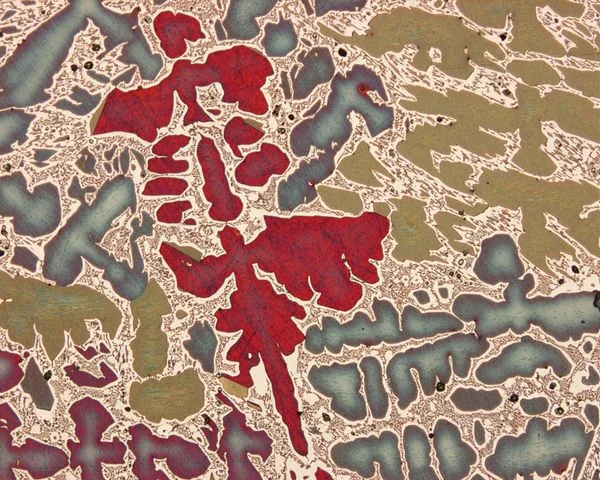
Metallography is a fundamental discipline in materials science and engineering that focuses on the study of the physical structure and components of metals and non-metallic materials (microstructure). By examining a material at the atomic and crystalline level, metallography provides critical insights into the material’s history, current state, and future performance.
Core Objectives and Scope
The primary goal of metallographic examination is to describe the microstructure of a material to understand how this structure influences its properties. According to the expertise of Schmitz-Metallographie, this method is not limited to steels but extends to a wide range of materials, including aluminum, zinc, magnesium, Inconel, and various composite systems.
Through microstructure analysis, several key factors can be determined:
- Manufacturing Processes: Identifying whether a material was cast, forged, or rolled.
- Heat Treatment Condition: Assessing if processes like hardening, tempering, or annealing were successful.
- Impurities and Inclusions: Detecting unwanted elements or non-metallic inclusions that could weaken the structure.
- Corrosion and Coatings: Evaluating the depth of corrosion attacks or the quality of protective layers.
Practical Applications and Case Studies
Metallography serves as both a quality control tool in production and a "detective" tool in failure analysis.
- Identification of Heat Treatment Defects: For instance, if an induction-hardened surface layer still contains free ferrite, it indicates that the energy input was too low or the carbon content was unsuitable. Identifying such defects prevents component failure in the field.
- Grain Size Determination: Using standards like ASTM E112 or DIN EN ISO 643, metallographers measure grain size, which is directly linked to mechanical strength. Generally, finer grains result in higher toughness and yield strength.
- Analysis of Cast Structures: In nodular graphite castings, the shape and distribution of graphite determine the tensile strength and elongation. Metallography ensures these meet international standards (e.g., DIN EN ISO 945).
- Investigation of Corrosion Damage: Complex mechanisms like intergranular stress corrosion cracking can only be characterized through metallographic microsections. Quantitative evaluations, such as measuring the depth of pitting or crack length, are vital for safety assessments.
The Preparation Process: The Importance of Precision
The success of a metallographic investigation depends entirely on the quality of sample preparation. A poorly prepared sample can create "artifacts" (fake features) that hide the true structure. A standard preparation workflow includes:
- Cutting: Sectioning the material without causing structural changes due to heat.
- Mounting: Placing the sample in a plastic resin (cold or hot mounting) for easier handling and edge protection.
- Grinding and Polishing: Using diamond slurries, pastes, and lubricants to achieve a mirror-like surface.
- Etching: Applying chemical reagents to reveal grain boundaries, phases, and constituents that are otherwise invisible.
Conclusion
In modern industries—ranging from aerospace and automotive to energy and medical technology—metallography is indispensable. Whether it is discovering that needle-shaped silicon crystals in an aluminum die-cast are causing embrittlement or verifying the grain size of a high-performance Inconel part, metallography provides the data needed for safety and innovation. By "translating" the silent language of materials, metallographers ensure that the components we rely on every day are safe, durable, and efficient.